

In South Africa, we talk about unemployment, we talk about productivity, we talk about transformation. But we almost never talk about belonging - and how deeply it shapes performance long before any policy could.
Imagine if we focused more on the individual and acknowledged the quiet uncertainty (or total panic) a person feels when walking into their workplace and wondering whether they truly fit in - whether they're even meant to be there at all. It's not your typical "imposter syndrome" - it’s often just the environment. And environments can be built differently.
If we addressed this first, perhaps the bigger conversations around unemployment, productivity, and transformation wouldn’t feel so overwhelming, because they'd already be moving in the right direction.
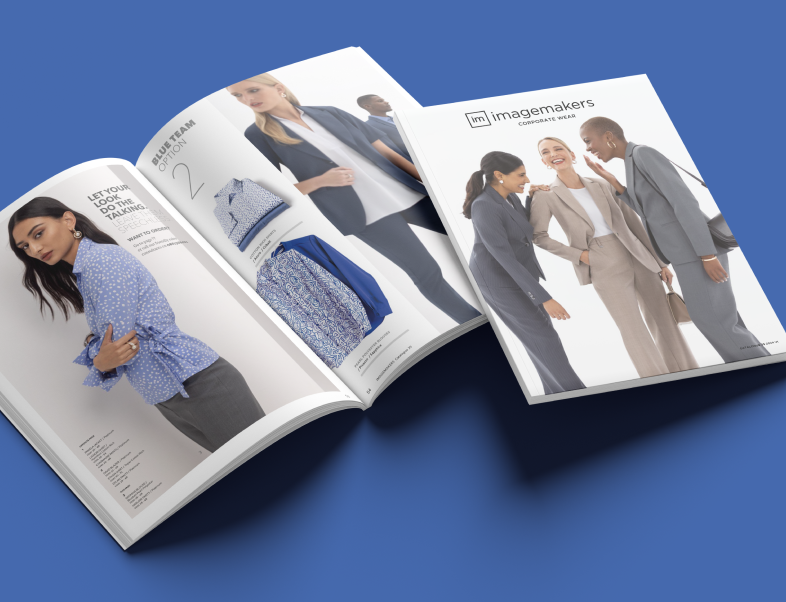
We work with corporate clothing every day. Over time, we've seen something changing - subtle at first, but now too obvious to ignore. Perhaps now that we've seen it, we can't unsee it? Clothing doesn't just influence appearance. It can decide whether someone feels connected, whether they feel anchored inside a team - or slightly outside it. It seems like such a fine line, but it's anything but.
And psychology supports this.
Belonging begins before performance
In 2012, behavioural scientist Hajo Adam and Columbia Business School professor Adam Galinsky introduced the concept of "enclothed cognition." They demonstrated that clothing associated with symbolic meaning can measurably influence cognitive performance. When people wear items linked to competence or authority, they often internalise those traits. They become what they wear.
But belonging is not just individual psychology. It's group psychology.
British social psychologist Henri Tajfel's Social Identity Theory says that part of our self-concept is shaped by the groups we belong to. Shared symbols - even something as simple as clothing - reinforce that identity and deepen our sense of connection.
In workplaces where expectations are unclear, employees often spend energy trying to decode what is acceptable rather than contributing confidently. Thoughtfully designed corporate uniforms reduce that ambiguity. They create clarity without hierarchy. And clarity clears away the fog of self-doubt and builds confidence.

The invisible tax of uncertainty
Here's another gem. Harvard professor Amy Edmondson's research on psychological safety shows that teams perform better when individuals feel safe enough to speak up, contribute ideas, and admit mistakes without fear of embarrassment or retribution.
This safety isn't created in policy documents. It's built in signals.
When company attire standards are inconsistent or culturally coded, employees can carry a subtle cognitive load: Am I dressed appropriately? Do I look professional enough? Do I look like I belong here?
Well-considered corporate wear can quietly remove that barrier. Importantly, it doesn't erase individuality; it simply creates a shared visual language - a baseline, a starting point, a level playing field - that allows people to focus on their work rather than themselves.
And the impact doesn't stay small. It builds over time.

Cohesion, loyalty, performance
Another huge benefit is noticing how belonging influences retention - just as much as it influences confidence. Organisational research shows that employees who feel a strong sense of belonging are far more engaged and therefore more likely to stay. Sounds obvious, right? If a staff member feels like they belong, they'll stay… but why then do so many companies get it wrong?
This is where staff uniforms and shared visual identity intersect with business outcomes. When people feel aligned rather than evaluated, they commit more deeply.
And cohesion builds loyalty. Loyalty in turn moves the productivity needle. Gallup's widely cited employee engagement research shows that highly engaged teams can deliver up to 18% higher productivity and 23% higher profitability. Those are pretty convincing stats. And they're not cosmetic gains. They're structural ones.
Context matters in South Africa
Belonging carries additional weight in South Africa. Professional spaces still reflect layered histories of access and exclusion. Visual alignment can reduce visible inequality between colleagues, particularly in client-facing roles.
In sectors such as hospitality and professional services, corporate clothing suppliers in South Africa play an important role. They establish shared standards and remove unnecessary comparison.
For organisations setting uniform standards in South Africa, the responsibility goes beyond aesthetics. Fit inclusivity, cultural nuance, durability, climate considerations, and cost all influence whether clothing genuinely supports belonging - or quietly undermines it.
Put it this way: belonging cannot be stitched on as an afterthought.

Beyond branding
Clothing alone does not create great company culture. But it creates signals. And signals influence how safe someone feels, how quickly they speak up, and how confidently they contribute.
Belonging is not sentimental. It is not decorative. It is the most basic - and most critical - part of a company's infrastructure. Because when individuals feel anchored rather than uncertain, seen rather than evaluated, aligned rather than tolerated, performance follows.
In South Africa, we are right to talk about unemployment, productivity, and transformation. But perhaps the real leverage sits much closer to the individual - in the small, visible cues that tell someone they belong.
Because when people no longer have to question whether they fit in, they are free to focus on how much they can add.
And when everyone adds, momentum builds, companies scale, and the net gain rises far beyond the individual.
If you enjoyed this article and are interested in the broader work culture and climate in South Africa take a look at our 'Working in South Africa Series Part 1' and 'Part 2'.