

It's hard to believe it's been 6 years since the world went into a pandemic lockdown - how is it possible for it to feel like yesterday and simultaneously like a lifetime ago?
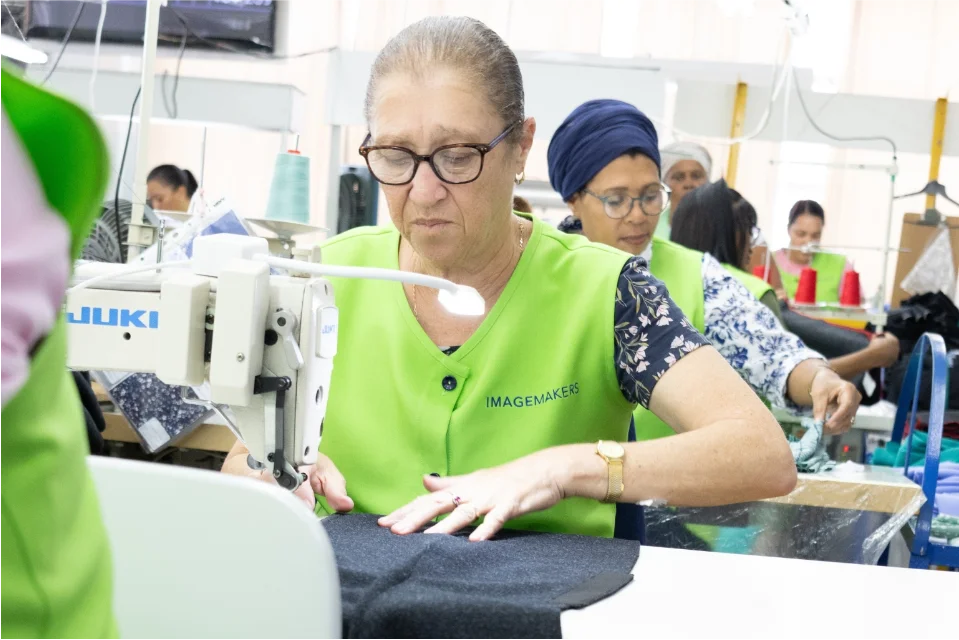
For us at Imagemakers every single industry stopped ordering their company clothes and uniforms from us. Overnight! Our production teams put all complete and incomplete garments on hangers and began to shift production to making face masks and protective gear and boy did we make a lot of them! What a crazy time…
Like the rest of the world, South Africans adapted, meetings moved online, our routines as we knew them completely disappeared, and safety took priority over everything else. In terms of corporate clothes, Tracksuits and "Zoom-ready" tops replaced what most people would have considered normal business attire just weeks before.
At the time, it felt like a permanent shift.
Six years on, it's now clearer what actually changed - and what didn't.
Most South African businesses didn't abandon the office. They simply adjusted around it. People are now thankfully back at work - some still holding onto the idea (and dream) that flexible hours don't affect productivity (and in some industries, perhaps that's true). But for most of us, it's back to full-time work with our wonderful and beloved teammates around us. Relieved? Yes. Changed? Definitely.
Because a lot of people realised something they really weren't expecting - working alone, for long stretches, isn't as cool and appealing as it first sounded. It can be isolating. It can take a toll. And it reminded us how naturally social we are, how much we rely on the rhythm and support of a team, and how much those day-to-day interactions actually mean to us.
It's strange to say, but it took something as disruptive as a global pandemic to bring that into focus. And as a result, most of us now have a very different outlook on life and what a working day should feel like.
And that shift has quietly reshaped corporate wear - not by replacing it, but by forcing it to evolve.
The office is back - just used differently
Speak to most teams today and you'll hear a similar pattern.
• People are in the office more than they were in 2021.
• Face-to-face time still matters.
• But the structure is looser than it used to be.
You're no longer dressing for five identical days. You're dressing for specific moments - meetings, client interactions, team days. That alone changes how people think about work clothes.
Clothing has to work harder now. It needs to move between settings, last longer days, and still feel appropriate in front of a client.

What changed - and what didn't
There's a tendency to say that everything became more casual after Covid. But that's only partly true. Maybe it more about what we value now?
Before 2020, many businesses leaned heavily on standardised corporate uniforms or fairly rigid dress codes. In some environments, that worked. In others, it felt unnecessary but remained the default. Today, those defaults are not just being questioned they’re being ripped up.
It's no longer: "What should our staff wear?"
But: "What actually works for them, day to day?"
At the same time, some things haven't changed at all.
• Clients still notice how teams present themselves.
• First impressions still carry weight.
• And most businesses still want their staff to look aligned and professional.
What people are actually wearing now
The shift isn't dramatic. It sits somewhere between 'what really matters' and 'practical'.
Across industries, you'll see:
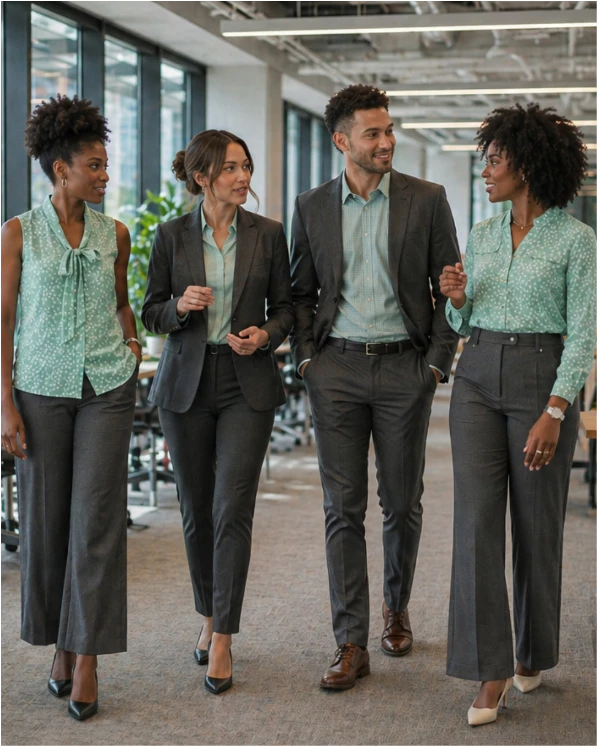
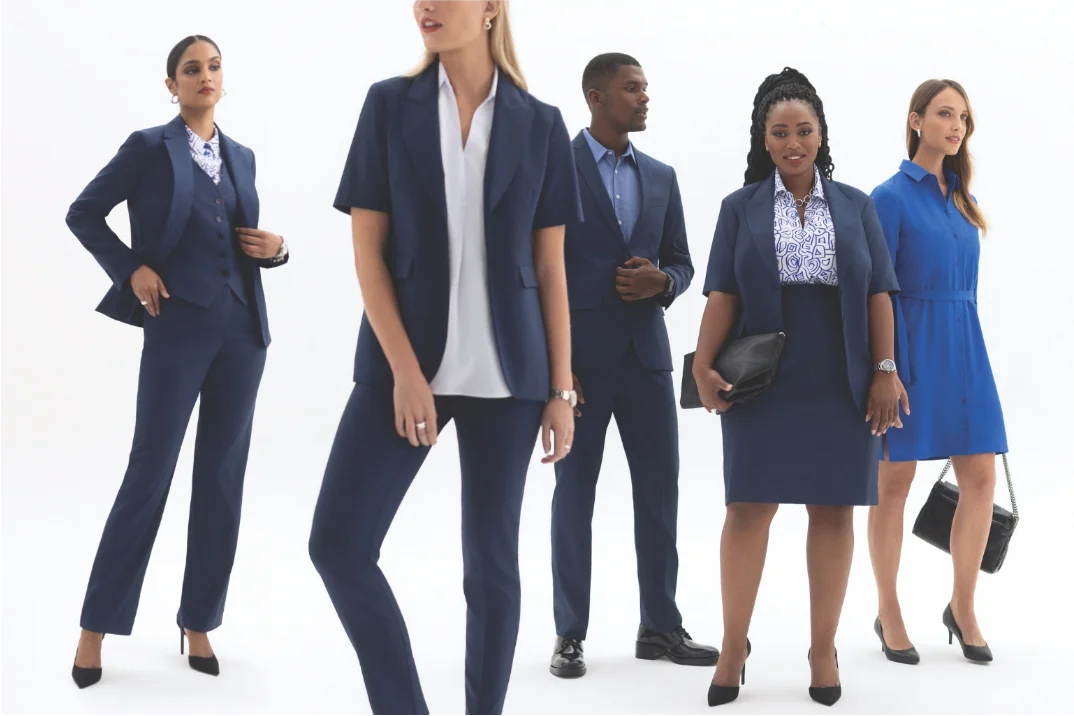
• Tailored trousers and chinos instead of full suits
• Well-fitted shirts and blouses that hold their shape through a full day
• Knitwear and layering pieces that work across environments
• Simple, structured corporate dresses that balance comfort and presentation
For women in particular, the change is noticeable.
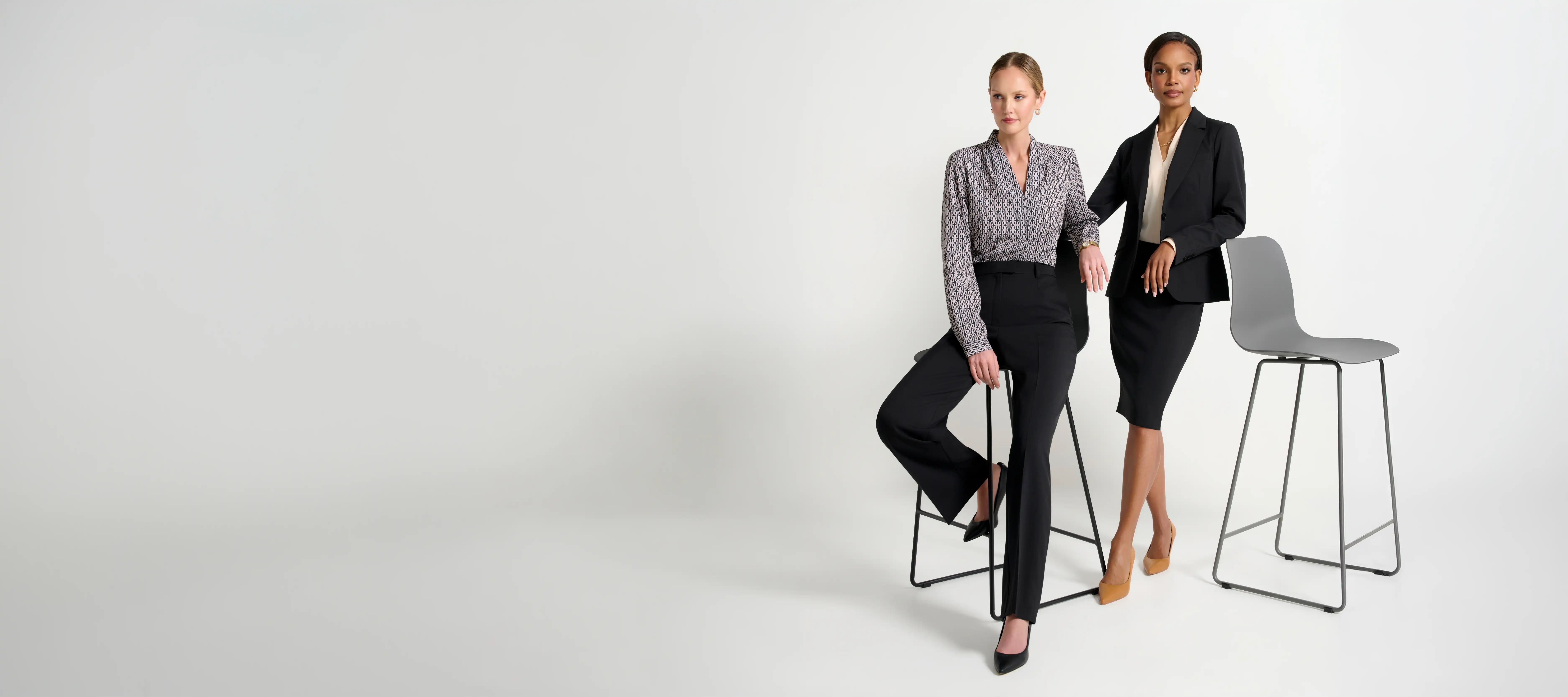
There's more demand for corporate wear ladies collections that don't feel overly formal or restrictive. The focus has shifted towards garments that can be worn comfortably from morning to evening without needing to be swapped out halfway through the day. And would we ever have seen an article like this pre pandemic - sad but true: What Body Shape Are You? The Corporate Wear GuideThat Actually Fits
This has naturally fed into broader demand for work wear for ladies that feels practical, not performative.
Even formal work wear for ladies has adjusted slightly - still polished, but generally easier to wear and better suited to real working environments. Maybe we are just so glad everyone is back at work that we're still spoiling them - naaa, I think it's so much more than temporary or a trend.
The South African context changes the conversation
Global discussions about workwear often focus on comfort, flexibility, and self-expression. Those factors matter in SA too - but they're not the only ones.
In South Africa, businesses tend to look at corporate clothing South Africa suppliers through a more practical lens.
Questions that come up repeatedly include:
• How long will this last?
• Can we reorder this consistently?
• Will it work across different body types in the team?
• Does it suit multiple roles within the business?
Clothing is rarely treated as a once-off decision anymore. It's something that needs to hold up over time - both in quality and in consistency. And in a supplier who can deliver this level of attention and service.
That's where experienced corporate clothing suppliers Cape Town and across the country tend to stand out.
They're used to thinking beyond the first order, and more about what happens a year or two down the line.
Where our experience aligns - and where it doesn't
Much of what's been written globally about workwear since 2020 will sound familiar.
Research from McKinsey & Company points to a clear shift: less rigid dress codes, more emphasis on comfort, and clothing that can move between home, office, and daily life.
That broadly reflects what many South African businesses have seen.
• People are dressing differently.
• There is more flexibility.
• And in some environments, the old rules have softened.
But again, that's only part of the story.
Very few local businesses have moved fully into long-term remote work. Many teams are still client-facing, site-based, or operationally tied to physical environments. That naturally places more importance on consistency and presentation than in markets where remote work is still dominating.
There's also the economic layer to consider. Globally, the conversation often leans towards wellbeing and personal expression. Locally, those factors sit alongside more practical concerns - durability, reordering, and making sure clothing works across an entire team. This changes things and feeds into what we already know.
Rather than a full move towards casualisation, most businesses have landed somewhere in the middle - keeping a level of structure, while allowing for more flexibility in how it's delivered.
Not more formal. Not more casual. Just more considered.
Why consistency matters more than it used to
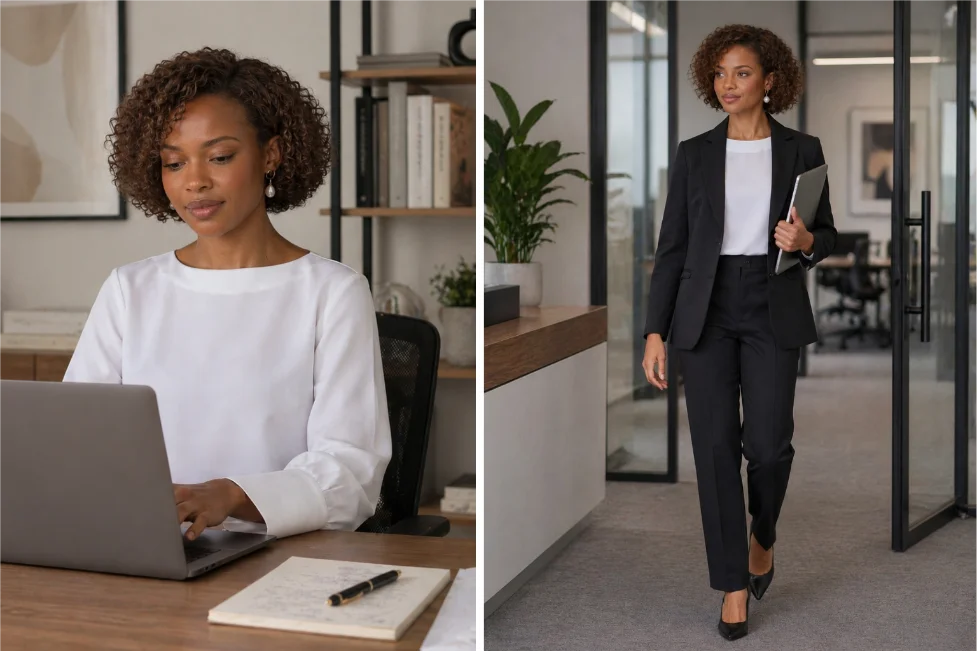
One subtle shift is how teams actually experience work itself. Think about it, people aren't always in the same place at the same time anymore. And this can create small gaps and potential friction in how a business feels day to day. Clothing helps bridge and connect that. Not in an obvious way - but as a quiet form of alignment and consistency.
We explored this further in our article: You Are What You Wear: The Quiet Psychology of Belonging at Work
The idea is simple - when people feel part of something, they tend to behave differently, more positively. And a shared standard - even a flexible one - can help reinforce that.
So - did the pandemic change what we wear to work permanently?
Yes. But not in the way many people expected. It didn't replace corporate clothing with something more casual.
It made businesses think more carefully about the welfare of their staff and what they actually need - what aligns with the business and what makes them happy.
In most cases, that's led to better outcomes:
• Clothing that people are more comfortable wearing
• Ranges that last longer and work harder
• Teams that still look connected, without feeling restricted
• And in many cases, far happier teams
Six years on, the biggest change isn't just what people wear. It's how we treat the people wearing it.