

Most companies don't set out to get corporate clothing wrong.
In fact, the process usually looks quite solid and well thought out on paper. Options are reviewed. Samples are approved. Decisions are made around what feels appropriate, presentable and aligned to the brand and the business. By the time everything is signed off, it can feel like 'that was surprisingly fun… we smashed it!'
And then the rollout happens. And what should be the best part of the process is when the cracks appear. Please know that this is not to scare you, its simply 40+ years of experience we’re sharing.
We're sharing this because often what looked right in a boardroom or fitting session doesn't always hold up in real life - especially when that "real life" spans cities like Johannesburg, Durban and Cape Town where the conditions people work in are so very different - you may as well be in three different countries!
That difference isn't visual - it's physical
Take Johannesburg, Durban and Cape Town - they don't just feel different. They place completely different demands on the human body.
Johannesburg sits at altitude, which means it moderates temperature but creates wider swings across the day. Mornings can be cool, especially with heavily air-conditioned rooms waiting for the mid-afternoon temperature rise – and it rises enough to make layering decisions matter. Corporate wear in Johannesburg has to cope with change - not extreme heat, but constant variation.
Durban presents a different challenge all together. Humidity completely changes how the body cools itself. Ever been to the tropics on holiday and lost a litre of perspiration in the first hour? Durban is the tropics! Ok so quick flash back to our junior school biology class and a bit of PTSD - sweat evaporates from the skin and helps regulate temperature… that's easily understood, but in humid air, that process slows down considerably because the air is already holding moisture. The result is that heat lingers on the body for longer. Uniforms that sit too close, trap moisture, or limit airflow don't just feel 'sticky' and uncomfortable – they can become genuinely distracting for the host and the hosts observers within a couple of hours.
Cape Town sits somewhere in between - but in many ways, it's the least predictable. The city's coastal position brings an abundant of wind into play in a way that few (other than Capetonians) can possibly imagine (think famous bike rides cancelled by the wind!). This changes how temperature is experienced. Moving air increases heat loss from the body, which is why a mild day can suddenly feel cold when the wind picks up. At the same time, direct sun can raise surface temperature quickly, especially in still conditions. That combination - shifting wind, sun exposure and fast-changing weather - means the body is having to constantly adjust.
Clothing in Cape Town has to deal with interruption.
Something that feels great at 9am can feel completely wrong by midday. Workwear that works in still conditions can become impractical once the wind cuts through it. Layers that are too heavy become a problem when the sun comes out, but too little thought and planning leaves people exposed when conditions turn again. And the safety and sanctity of an airtight office offer some reprieve but only for those office bound folk with near perfect aircon settings. Until you step outside of course.
This is why two garments that look almost identical on a hanger can behave completely differently once they're worn in each city.
Johannesburg: movement, meetings, and holding shape
Johannesburg tends to reward clothing that keeps its composure.
Not in a stiff or overly formal sense, but in the way garments carry themselves through a full day. There's often more movement between meetings, more transitions between indoor and outdoor environments, and more expectation that corporate clothes will still look perfect late into the afternoon.
That usually means garments need a bit of structure - enough to sit properly on the body, enough to avoid losing shape, enough to feel appropriate across different settings.
But there's a line.
Clothing that becomes restrictive, heavy or overly rigid doesn't perform well here either. It might look right at 9am, but if it becomes uncomfortable by midday, the wearer starts to disengage from it. That shift is subtle, but real.
And there's a useful parallel here with the idea of something called 'enclothed cognition', a concept introduced by researchers Hajo Adam and Adam Galinsky. Their work showed that clothing for work doesn't just influence how people are perceived, but how they behave - through both its symbolic meaning and the physical experience of wearing it.
That's part of the reason why we explored this more deeply in You Are What You Wear: The Quiet Psychology of Belonging at Work
And it's exactly why businesses looking for corporate clothing suppliers Johannesburg should think beyond appearance - and focus on how garments actually behave across a full day.
Durban: heat, moisture, and very little margin for error
Durban doesn't give you much room to get it wrong.
In a humid environment, fabric decisions stop being secondary. They become the main event. Weight, breathability, fibre composition, cut - all of it matters more once moisture and heat become part of the equation.
Clothing that holds heat or sits too closely against the body tends to reveal its flaws quickly. What felt acceptable in a controlled fitting environment can become uncomfortable far earlier in the day than expected. It changes how people move. How long they stay focused. How willing they are to engage with clients. It makes a big difference.
Did you know that there is actual guidance from organisations like the World Health Organization that highlights how heat stress affects both physical comfort and cognitive performance?
That's why Durban tends to favour clothing that works with the body rather than against it.
Which is why businesses comparing corporate wear suppliers Durban tend to prioritise airflow, fabric behaviour and day-long comfort over how something first appears on a hanger.
Cape Town: adaptability over certainty
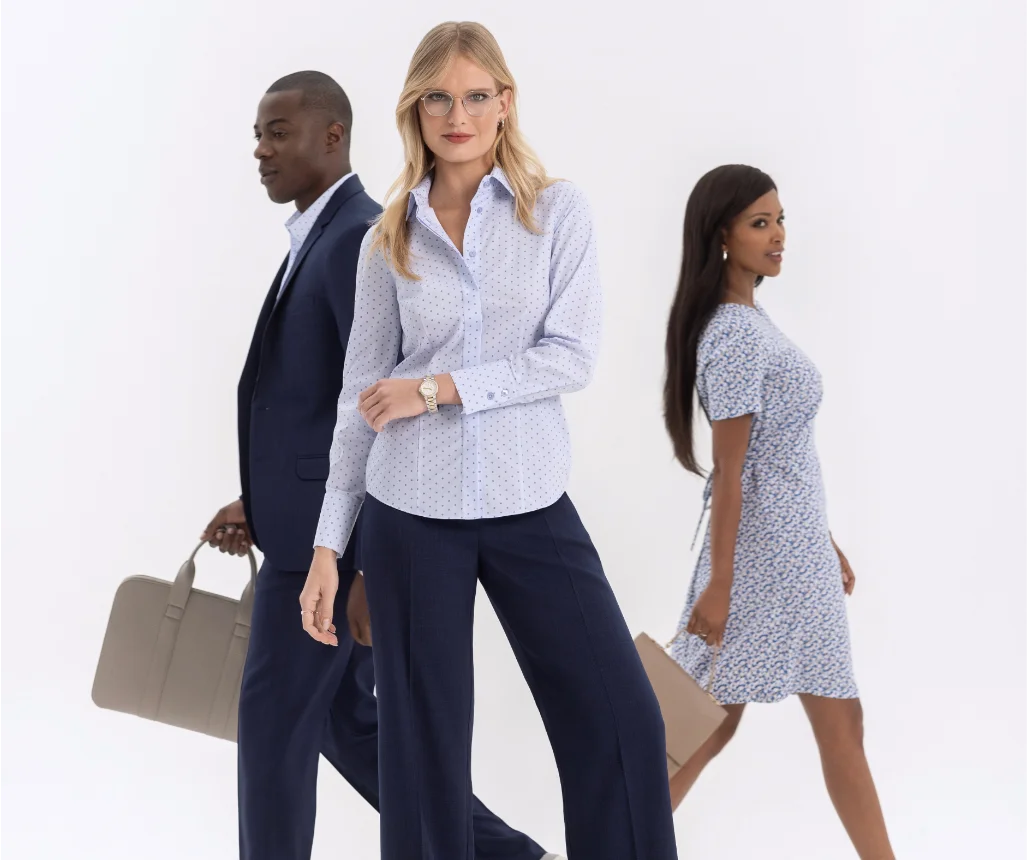
Cape Town plays an entirely different game. We're talking just about team uniforms now!
It's not sustained heat like Durban, and it's not steady variation like Johannesburg. It's inconsistency. Conditions can change quickly, and often without much warning. Wind can strip warmth from the body even on otherwise mild days, while direct sun can make the same outfit feel too heavy not long after.
That creates a different requirement altogether.
Clothing in Cape Town needs to be adaptive.
Not bulky, not overly fixed - but flexible enough to handle change. Layers that can be added or removed without disrupting the overall look. Fabrics that don't feel clingy and oppressive in the sun but still offer some protection when the temperature drops. Garments that move easily without losing their shape when conditions shift.
This is where it gets difficult and a corporate clothing supplier like Imagemakers can help. Because what works in a stable environment doesn't always translate well into an unpredictable one. Cape Town exposes that quickly.

Where national rollouts fall short
The issue isn't that companies ignore these differences. It's that they underestimate them. Including gender and how 'different' a man and woman can react to these 'differences' (more about this difference in our next blog!). Because corporate wear for ladies in these unique environments is very different to corporate wear for men!
Where national rollouts fall short is in applying a single set of decisions across multiple cities, assuming consistency requires sameness. In practice, it doesn't create consistency - it just creates friction.
Johannesburg may demand structure and flexibility. Durban demands breathability and ease. Cape Town demands adaptability.
Treat those as the same problem, and the clothing starts to work against the people wearing it.
This is something we've touched on in What South African Teams Are Wearing to Work in 2026
- where adaptability, rather than uniformity, starts to emerge as the more practical direction.
A more realistic way to think about consistency
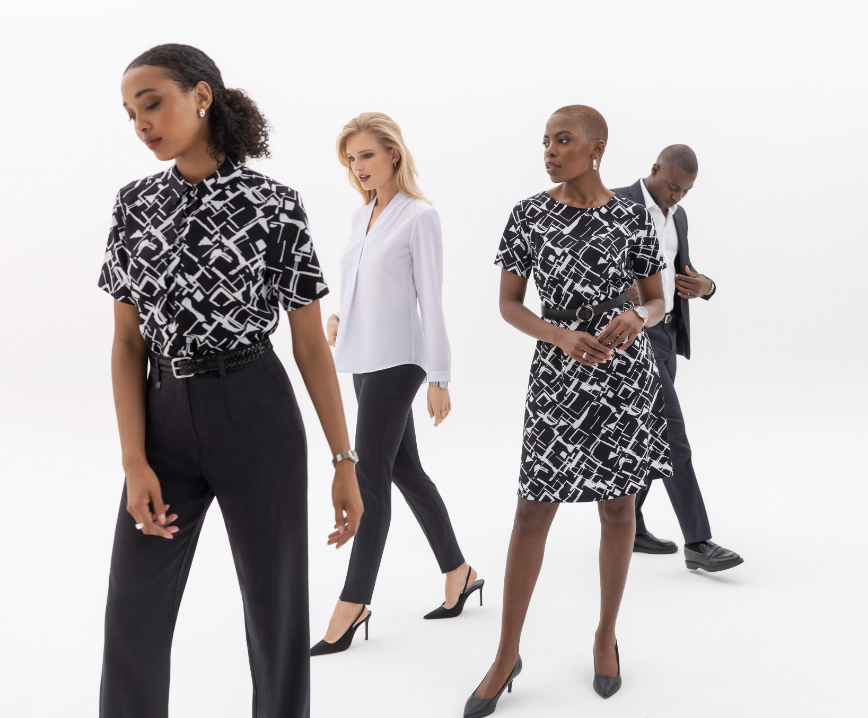
Consistency doesn't have to mean identical. It can mean 'aligned'. The same thinking. The same intent. But expressed differently depending on where people actually are.
That might mean slightly different fabric weights. Adjustments in structure. Layering options that reflect the city. But isn't that ultimately what clothing for work is meant to do - respond to real conditions, not ideal ones.
Why this matters more than it seems
It's easy to treat this as a surface-level decision. But over time, small mismatches add up.
That's why the most effective approach isn't about finding a single answer that works everywhere. It's about understanding that Johannesburg, Durban and Cape Town are asking different questions - and we must answer each of them properly.
That's where we come in – not as a one style fits all type of team uniform supplier. Not as a fixed solution.
But as something that actually fits the life it's part of.