

South Africa's skills shortage is often discussed as if it were someone else's problem - a policy issue, a funding gap, a talking point. But on the ground, in communities and on factory floors, it is far more real. We see it every day.
There's a strange juxtaposition that persists: businesses struggle to find skilled people, while thousands of young South Africans complete training programmes that basically lead nowhere. Upskilled yes, a job… unfortunately not.
The issue isn't a lack of training schools or learnerships. It's a lack of pathways.
At Imagemakers in Salt River, Cape Town, we've been addressing this quietly and deliberately from within. Not through big marketing campaigns or CSR noise, but by building something practical - a structured route from accessible training through to meaningful, long-term employment.
This is what we believe a working skills pipeline should actually look like. It's called 'Stitch by Stitch' and it opens every year in November.
When training has no next step
South Africa's youth unemployment crisis has been discussed for years, yet many learnerships still end the same way: with a shiny certificate, but no job.
Learners are often trained in isolation, disconnected from real production environments, and expected to be "work ready" without ever stepping into a business. Most have never experienced real accountability, deadlines, or quality standards.
At Imagemakers, we remove that disconnect early.
Learners don't train around our business - they train inside it. From day one, they are exposed to the real pressures and expectations involved in producing everything from everyday corporate clothing to more specialised client orders.
Our thinking is simple: if someone is expected to perform like an employee, they need to work like one long before that day arrives. We think that's pretty obvious.
They also need to understand what success and failure look like in a safe, respectful environment where confidence can grow. Around here, we live the mantra: 'first comes courage, then comes confidence'. Mistakes will happen but we learn from them.
A staged pathway, not a dead end
We don't treat learnerships as standalone programmes. Instead, we've built a clear progression model:
Training → Production → Specialisation → Long-Term Employment
Learners begin with foundational skills and move quickly into supervised production. As they grow in confidence, they begin to specialise - whether that's sewing, finishing, quality control, or working on specific garment types.
They work on real products from the start: work uniforms, structured ranges, and detailed production runs that go directly to our clients.There's no "practice work" sitting on shelves.
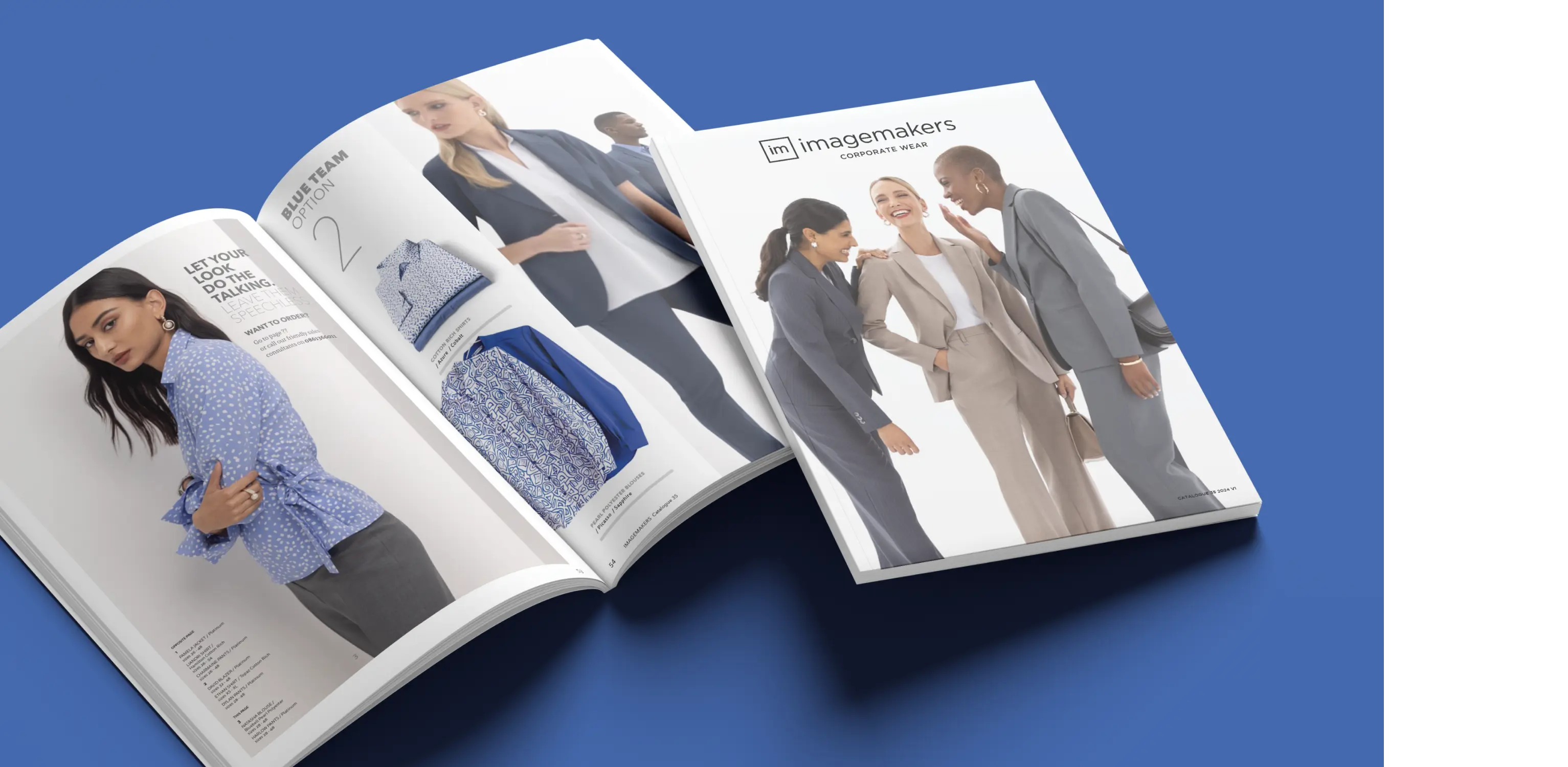
In fact, many learners contribute to items featured in our hospitality and hotel uniforms catalogue, knowing that what they produce will be worn in high visibility, real professional environments. A bit of pressure sure, but 'pressure is a privilege' - another mantra of ours that's always delivered with a wink and a smile.
That shift - from observer to contributor - is where programmes either succeed or quietly fail.
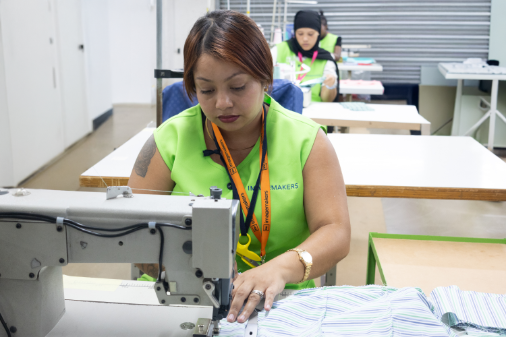
Gillian: "This was my first real job"
For Gillian, joining our learnership school marked a turning point.
She had completed a short sewing course and earned a small income doing alterations at home, but had never had a formal job.
"Coming here was my first official job," she says. "That alone boosted my confidence."
Still officially in training, Gillian now supports others who struggle with specific techniques. On the production floor, she's earned the nickname "Teacher."
"I didn't expect to grow this fast," she says. "But when people trust you, you push yourself harder."
She now works across multiple categories, including our most popular - work wear for ladies range, gaining experience that makes her longer-term employment real, not theoretical.
Another learner, a familiar pattern
Another apprentice joined us with no factory experience at all.
At first, the pace was overwhelming - machines, targets, quality checks. Progress was slow, then steady.
Today, she works independently across all our office attire ranges and supports final quality checks on large production runs before dispatch.
"It's different when you know people are going to wear what you made," she says. "I want to do the best I can."
That sense of ownership doesn't come from theory. It comes from responsibility.
Retention, honestly measured
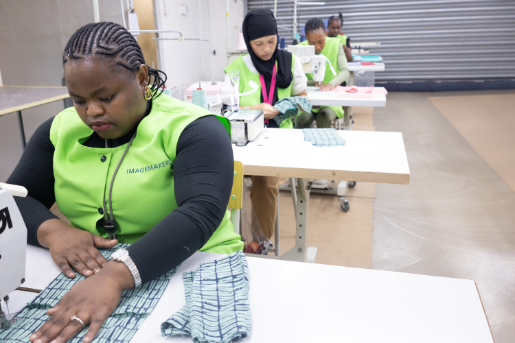
Retention is one of the clearest indicators of whether a programme works. Ours is often very high - sometimes reaching 95%.
But we're realistic. When learners receive other job offers, they sometimes leave. And while that can be difficult for us, it's also a positive sign for the wider economy.
What matters most is that they leave with skills, confidence, and employment opportunities they didn't have before.
As our programme has grown, we've increased our annual intake by 30%, while strengthening mentorship and support systems. Over time, we've seen that retention improves when learners can clearly see a future that feels achievable - not just promised.
Training people to belong
We don't see this as charity. We see it as workforce sustainability.
Our learners are trained on real machinery, within real production schedules, producing garments that meet professional standards. This includes everything from corporate dresses to broader ranges developed alongside leading corporate clothing suppliers in South Africa.
The expectation is simple: quality, consistency, and pride in what is produced.
As one of our interns put it:
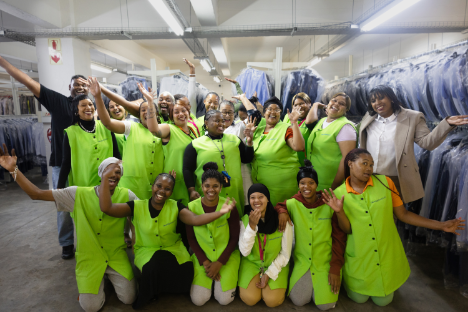
"We don't train people to leave - we train people to belong."
Why this story matters
In a country searching for real solutions to unemployment, this model offers something rare: a genuine pathway from training to employment.
• It shows how internal skills pipelines can address national challenges
• It replaces surface-level initiatives with real structure and accountability
• It brings human stories into a conversation often dominated by statistics
• And it proves that businesses can be part of the solution - not just observers
Because learnerships fail when there is no next step - we have seen this happen time and time again.
They succeed when businesses are willing to build those steps - and stand behind them.
At Imagemakers, this is simply how we believe things should be done. And if we can pay it forward, perhaps more companies will follow suit.